
Mars PLM
the native SAP PLM Software for End-to-End Product Lifecycle Management
Built on

TL;DR — Mars PLM at a Glance

Mars PLM is a modular SAP PLM addon developed by Avvale PLM.
It extends SAP S/4HANA and SAP ECC with a visual, collaborative workspace for managing the full product lifecycle — from concept and design through manufacturing and after-sales.

Core capabilities include BOM management (EBOM/MBOM synchronization), engineering change management, document and CAD management, product costing and prototyping, and material master governance — all running natively inside SAP with no middleware required.

Mars PLM serves discrete and process manufacturers across automotive, industrial machinery, aerospace, consumer electronics, and food & beverage, helping teams cut development time by up to 30% and eliminate data silos between engineering, production, and procurement.

33%
of product development time
is wasted on non-value-added work.
Here's where that time actually goes — and what it costs your business.
What is Mars PLM and why does it matter for SAP users?
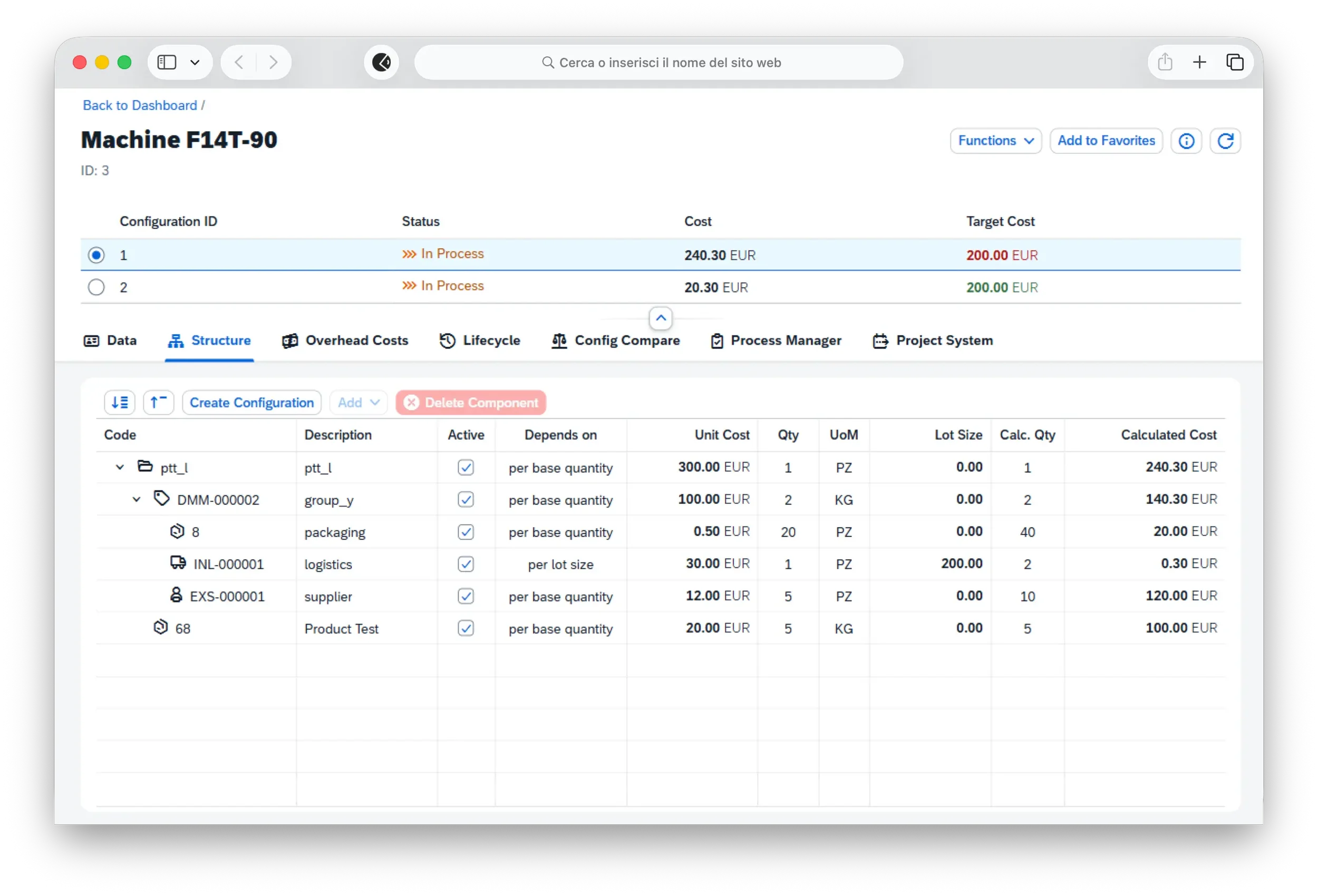
WE BUILD THE PERFECT PROCESSES FOR PRODUCT LIFECYCLE MANAGEMENT
FROM CONCEPT TO AFTER-SALES.
THE CHALLENGES
What Product Lifecycle challenges does Mars PLM solve?
Manufacturing companies running SAP face a consistent set of product data challenges. According to the Project Management Institute, approximately 33% of time in product development is spent on non-value-added activities — searching for data, reconciling conflicting versions, and manually transferring information between systems. These inefficiencies directly impact time-to-market and profitability.
Mars PLM addresses each of these challenges by centralizing product data inside SAP, automating change workflows, synchronizing BOM structures in real time, and providing cost visibility from the earliest prototype stages and bridging SAP with shop-floor execution through its SAP-Plex integration.
Every challenge above has a module built to solve it.
Pick one. Pick all. Deploy at your own pace.
CAPABILITIES
How does Mars PLM work? A modular Overview of core Capabilities
Mars PLM’s modular architecture allows organizations to deploy individual capabilities or the full suite, depending on their maturity and priorities.
Every module runs natively within the SAP environment and shares a common data layer — no external databases, no middleware, no synchronization jobs.
BENEFITS
What measurable Benefits can you expect from Mars PLM?
Organizations that implement Mars PLM as their SAP PLM software report significant improvements across product development KPIs. Because all modules operate within the same SAP instance, the compounding effect of centralized data, automated workflows, and visual navigation delivers results that standalone tools cannot match.
INDUSTRIES
Which industries use Mars PLM for SAP Product Lifecycle Management?
Mars PLM serves both discrete and process manufacturers. Its modular design means each industry vertical can deploy the capabilities most relevant to their specific product lifecycle challenges.

You have options. Here's why SAP-native wins.
No middleware. No extra infrastructure. No re-implementation when you migrate to S/4HANA.
COMPARISON
Why choose Mars PLM over other SAP PLM solutions?
The SAP PLM landscape includes several approaches: SAP’s own standard PLM functionality, third-party PLM platforms integrated via middleware, and SAP-native extensions like Mars PLM. Here is how Mars PLM differentiates itself.



Still have questions? You're not alone.
Here are the answers to what
SAP teams ask us most.
-
Mars PLM is a modular SAP PLM addon developed by Avvale that extends SAP S/4HANA and SAP ECC with visual product lifecycle management capabilities. It provides BOM management, engineering change management, document control, product costing, recipe and specification management, material master governance, and SAP-Plex integration — all running natively inside your SAP system.
-
Mars PLM is a native SAP PLM extension, not a standalone platform. It installs directly into your BTP environment and reads from and writes to SAP tables without middleware or external databases. This eliminates integration complexity and ensures a single source of truth.
-
Yes. Mars PLM supports both SAP S/4HANA PLM and SAP ECC PLM environments. Organizations can deploy Mars PLM on their current SAP system and carry it forward during migration to S/4HANA without reimplementation.
-
Mars PLM’s BOM Advanced Tool provides synchronized management of engineering BOMs (EBOM) and manufacturing BOMs (MBOM). It features drag-and-drop BOM restructuring, multilevel management, version comparison, and conflict detection — ensuring alignment between design intent and production reality.
-
Mars PLM provides structured workflows for creating, reviewing, and approving engineering change orders (ECOs). Changes are tracked with full audit trails, integrated with SAP, and linked to affected documents, BOMs, and materials. This replaces paper-based or email-driven processes with a governed digital workflow.
-
Yes. Mars PLM’s modular architecture allows you to deploy individual modules independently. Many customers start with BOM management or engineering change management and expand to document control, product costing, and other modules over time. You invest only in the functionality you need.
-
Mars PLM is designed for both discrete and process manufacturers. Primary industries include automotive and transportation, industrial machinery and heavy equipment, aerospace and defense, consumer electronics and high-tech, and food, beverage, and process industries.
-
Implementation timelines vary by scope. Individual modules can typically be deployed and productive within a few weeks. A full-suite implementation across multiple modules follows a phased approach, with each phase delivering standalone value. The native SAP architecture eliminates the integration timelines required by external PLM platforms.
-
Yes. The Product Design Cost module calculates product costs based on BOM structures during the prototype and development phases. Teams can compare cost impacts across prototype versions and make cost-driven design decisions before committing to production tooling.
-
You can request a free demo at marsplm.com/contact. The Avvale team will walk you through the modules most relevant to your industry and product lifecycle challenges, using real scenarios and data structures.
-
The SAP-Plex Integration is a standardized connector that bridges SAP and Plex MES bidirectionally. It synchronizes planning information from SAP to Plex and feeds execution data back from Plex to SAP — eliminating manual data transfers and ensuring alignment between ERP planning and shop-floor execution without custom development.
-
The Formulation Hub module governs product formulations, formula versioning, and specification control for process manufacturers. It supports the full lifecycle from R&D recipe development through production release, maintaining traceability and compliance within the SAP environment.
Ready to transform your SAP Product Lifecycle Management?
Stop losing engineering productivity to disconnected systems and manual processes.
Discover how Mars PLM can centralize your product data, streamline engineering changes, and accelerate time-to-market — all within the SAP environment you already run.